• About Me
  • Consultation
  • Help for Families
  • Books and Articles
  • Self-Compassion
  • DBT Self-Help
  • Blog
Menu

Amanda L. Smith, LCSW

900 Austin Ave
Waco, TX, 76701
941.704.4328
Borderline Personality Disorder, Self-Injury, and Emotional Dysregulation

Your Custom Text Here

Amanda L. Smith, LCSW

  • About Me
  • Consultation
  • Help for Families
  • Books and Articles
  • Self-Compassion
  • DBT Self-Help
  • Blog

How to Be Gentle — A Skill from Dialectical Behavior Therapy

July 1, 2022 Amanda Smith

Photo by TR Photography

Are you gentle with others? What does it mean to be gentle in relationships?

Dialectical behavior therapy (or DBT) is an evidence-based treatment created by psychologist Marsha Linhean that helps people manage unwanted emotions, improves relationships, and helps people reach important goals. The ultimately goal in DBT is to create a life worth living. Better relationships could be an important goal you are working toward.

If you are learning DBT skills and have a desire to improve your relationships with those you love, then the GIVE skills are for you.

G = be gentle
I = act interested
V = validate
E = use an easy manner

Being gentle may mean that we:

• refuse to yell or argue even when being angry makes sense
• say “please” and “thank you”
• assume that others have the best of intentions
• speak quietly
• don’t play the “family historian” and remind people about their previous mistakes
• forgive
• are mindful of what the other person is thinking or feeling
• say, “I love you.”
• say, “I’m glad that you’re in my life.”
• say, “Thank you for being you.”
• don’t imagine that someone else’s mood shift is our fault
• help when we can
• allow others to be who they are
• let go of judgments
• don’t complain
• refuse to threaten or say things we know will hurt

Creating a healthier relationship is your responsibility. It starts with you—not the other person.

When to Use This Skill
You can use this skill anytime you have an interaction with someone.

You can use this skill with a stranger, roommate, customer service rep, your children, your parents, and you might even decide to practice this skill with a therapist. The more you practice this skill, the easier it is to use when you have an urge to be mean, yell, or say things you might regret later.

Remember: These skills are for everyone. When family members and other loved ones learn and use these skills, amazing things can happen. Don’t settle for an average relationship when you can make improvements together.

One of my favorite books to recommend to couples is The High-Conflict Couple by Alan Fruzzetti. It’s a DBT book with even more good ideas for using the GIVE skills.

Ask yourself:

• What steps can I take today to improve this relationship by just a little bit?
• Am I gentle with others? Am I demanding or do I act entitled?
• How am I showing others that I love and care about them?


Want more? Check out these resources about creating a life worth living.

Ideas for Practicing DEAR MAN

DBT for Family Members and Friends

My Dialectical Life: A DBT Self-Help Tool

Should People with Borderline Personality Disorder Use Ayahuasca?

June 22, 2022 Amanda Smith

At a professional training many years ago, I heard a therapist share this clinical wisdom:

Recovery is about living in reality.

As a dialectical behavior therapy (DBT) therapist, it’s something I think about often when I’ve met people who are hurting and desire quick and lasting relief from their emotional pain. Too often we want to run from that suffering. Alcohol, drugs, sex, gambling, and entertainment keep us far from the reality we so desperately need to heal.


Several years ago, I was contacted by someone with a diagnosis of borderline personality disorder. She was interested in my opinion on using ayahuasca for healing her trauma. Was it something that worked? Would I recommend as a treatment that may help her get some relief from unwanted thoughts and emotions?

While I don't doubt that there are some people who benefit from microdosing hallucinogenics or psychedelics, there is little scientific evidence to suggest that this a beneficial treatment that extends much beyond the short-lived, temporary experience of the psychedelic session. Furthermore, we know that not every treatment is beneficial for every person. While some people may be helped by this type of intervention, others may be inadvertently harmed.

Because recovery from BPD often takes hard work over an extended period of time, my fear is that relying on these types of approaches often gives people the false hope that there must be a quick fix or another kind of treatment that provides instant relief. Enjoying the freedom that comes with emotional health almost always requires patience on the part of the person who is healing. Relying on alternative treatments for answers to complex problems may lead to disappointment.


If you are thinking about using alternative treatments to help reduce symptoms related to borderline personality disorder, ask yourself:

• Has this treatment been shown to help people who are experiencing similar problems?

• What are the pros and cons of this intervention?

• Does the potential reward outweigh the risks?

• Have I tried evidence-based treatments (like dialectical behavior therapy or mentalization-based treatment) first?

• Am I using this intervention to temporarily escape reality or absolve myself from adult responsibilities (parenting, work, school, other caregiving)?

Informed treatment decisions help you to stay in control of your emotional, physical, and spiritual health.

Interested in learning more about getting a diagnosis of borderline personality disorder or understanding your treatment options? Click here to learn more about my practice.


Please also check out:

DBT Self Help

How to Recover from BPD

Treating BPD Without Drugs

Becoming More Self-Compassionate

Cool T-Shirt to Kick Off BPD Awareness Month for 2022

April 3, 2022 Amanda Smith
bpd-shirt.png

Hooray!

The month of May marks BPD Awareness Month and you can share your pride in reducing stigma and increasing education all month long (and in five different colors, if necessary).

Click here to purchase today.

Coping with the Symptoms of PMS and PMDD

April 1, 2022 Amanda Smith
Treating premenstrual syndrome and premenstrual dysphoric disorder

Treating premenstrual syndrome and premenstrual dysphoric disorder

Many emotionally-sensitive women experience an increase in symptoms between 3 and 10 days before their menstrual period begins. These symptoms may include:

• depressed mood
• tearfulness
• anger
• anxiety and fearfulness
• mania
• dissociation and brief psychosis

On Saturday, April 23, 2022, Amanda Smith, LCSW will help help to dispel some myths and discuss new ways of coping for symptoms of premenstrual syndrome (PMS) and premenstrual dysphoric disorder (PMDD) at 10:00 am Pacific/1:00 pm Eastern.

Join us for an honest discussion about:

• diagnosing (and self-diagnosing) PMS and PMDD
• effective nutritional, pharmacological, and cognitive based treatments that work
• coping strategies you can use each and every month
• skills to use so that the symptoms of PMS and PMDD won't interfere with your relationships

This special event is open to anyone who would like to learn more about this important topic. If you or someone you care about suffers from PMS and PMDD then this webinar is for you.

The cost is $39 for the 60-minute online workshop with an opportunity for Q & A with Amanda. This event will also be recorded for future listening for registered participants.

Click here to register today!

Questions? You can find me at amanda@hopeforbpd.com.

How Do You Know When DBT is Working?

December 9, 2021 Amanda Smith

There are lots of reasons to start dialectical behavior therapy (DBT) and there’s lots of research to show that it’s an effective treatment for many individuals.

People often come to DBT with a list of goals they’d like to accomplish.

These goals may include:

• decreased self-harming or self-sabotaging behaviors (binge drinking, using drugs, or avoiding)
• increased capacity to feel happiness, peace, or contentment
• healthier relationships
• reduced shame, anger, and guilt
• more mindful living
• greater self-respect
• better coping strategies
• engaged in meaningful paid work
• freedom from destructive urges

When I’m working with my clients over many months, I want them to think about how they are feeling better and are moving toward their life worth living goals.

I created this self-assessment to help my clients identify areas of strength and growth as they are learning and practicing the skills. When they are ready to graduate from DBT, I ask them to complete the following assessment.

If you’re in a DBT program or are teaching yourself these skills, how would you assess your progress?

0 = no change or progress
5 = moderate change or progress
10 = consistent mastery in this area

• I am able to define the DBT skills.  _____

• I can help explain or teach the DBT skills to others in my life.  _____

• I am able to use a wide variety of the skills across many different environments (home, school, work, church, volunteer positions, when I'm with friends or family members).  _____

• I feel confident in asking for help before things become a crisis or an emergency.  _____

• I understand how regular mindfulness practice can help reduce symptoms related to stress and anxiety.  _____

• I am able to observe and describe my thoughts and emotions without acting on them mindlessly.  _____

• I have many different ways to help soothe and distract myself when I'm upset.  _____

• I understand the concept of dialectics and dialectical thinking.  _____

• I can validate others.  _____

• I can make a decision to let go of judgments about myself and others.  _____

• I have ways that I can increase positive emotions such as happiness, hope, and gratitude.  _____

• I am able to practice radical acceptance about the things in life I cannot change.  _____

• I know what is important to me and can stick to my values.  _____

• I have skills that I can use to help me communicate more effectively with others.  _____

• I respect myself.  _____

• I understand how taking care of my physical health affects my emotional well-being.  _____

• I can work toward solving my problems.  _____

• I understand that self-harming and self-sabotaging behaviors are choices I don’t have to make.  _____

• I have specific plans to help me create a life worth living after graduation.  _____

Ultimately you are the one who has to decide if DBT is the right fit for you or continues to be a good fit.

What are your reasons for participating in or continuing treatment? What is your Wise Mind telling you to do next?


Interested in learning more about DBT? Please check out My Dialectical Life.

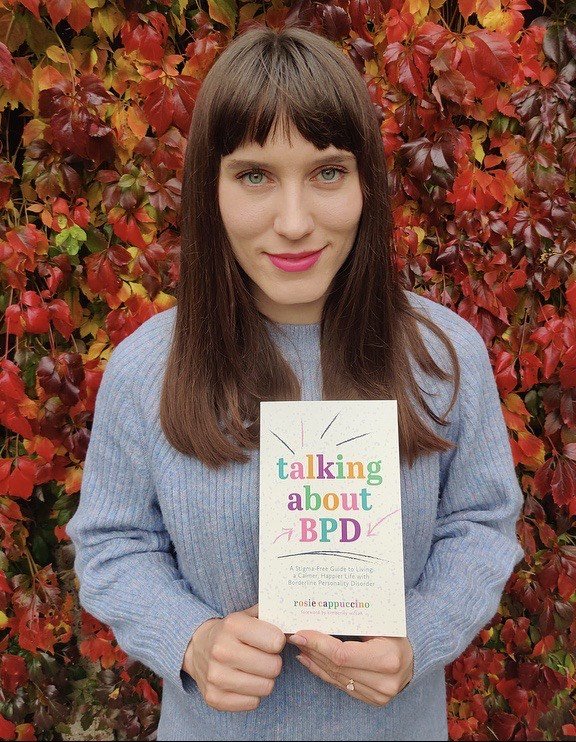
New Book: Talking About Borderline Personality Disorder (2021)

November 9, 2021 Amanda Smith

I love hearing from new authors and I’m very excited about Talking About BPD: A Stigma-Free Guide to Living a Calmer, Happier Life with Borderline Personality Disorder (Jessica Kingsley Publishers, 2021) by Rosie Cappuccino.

I hope that you enjoy this interview with Rosie. —Amanda


Tell us about your background. Why write Talking About BPD?
I’ve been blogging about borderline personality disorder (BPD) since the beginning of 2014. I started blogging because I needed an outlet to express the fear, confusion and loneliness I felt regarding my new diagnosis. I didn’t neither knew anyone with BPD nor understood how to manage it, so I was looking to connect with others who could help me learn more about myself. I also recognised immediately the horrendous levels of stigma associated with BPD and I wanted to share my experience of this condition—an experience that bore very little resemblance to depictions I saw online and read about in books.

After a few years, my blog started to grow and I started doing more podcasts and writing. In 2019, I won a Mind Media Award for my work towards increasing understanding towards people with BPD and it was around that time that my book started to take shape. I wanted to produce a book that could bring comfort and validation to people with, or who related to, a diagnosis of BPD. I know how isolating and agonising life with such a stigmatised condition can be and I wanted to do something that might alleviate the pain somewhat. 


What is the most important message in your book for individuals who have just been diagnosed?
There are a handful of key ‘takeaways’ I think- and people who have contacted me since the book’s release have affirmed these. Firstly, that people with BPD are not what the stereotypes present them as; they are not manipulative, attention-seeking or dramatic.

People with BPD commonly experience intense distress and it’s only natural that a person’s behaviour will reflect how distressed they feel inside. Secondly, the book offers a message of hope that things can feel better over time; its readers are lovable, valuable, worthy of respect and deserving of care, even when they may have been told (directly or indirectly) that they are not.   


What do you wish more mental health professionals knew about BPD?
I wish that all mental health professionals tried to imagine themselves into the shoes of a person in such intense distress. When a professional uses their imagination (or perhaps even lived experience) to empathise to the deepest possible level, then I believe they are less quick to judge emotional distress and the person in front of them. In my opinion, the most effective mental health professionals are those who show unfailing respect for an individual, even when that person is living, thinking, feeling, communicating and behaving differently to them.

I want high-quality, stigma-free training on borderline personality disorder to be widely available to all mental health professionals so that they are fully-equipped to understand and skillfully support people with this condition who come into their settings. I also want professionals to think critically when they encounter myths and stereotypes, rather than blindly accepting them and then have the courage to stand up and challenge them, even when that involves questioning what a colleague or a manager is saying. 


How do you think family members and friends can help someone who has just been diagnosed with BPD?
First of all, loved ones of people with BPD need to learn about the condition from reputable and non-stigmatising sources. They need to be careful not to absorb stigma and then pass on its damaging effects. Secondly, I would recommend ongoing dialogue with the person affected by asking open questions like ‘what would help you?’, ‘how can I communicate most helpfully with you?’, ‘what makes you feel comfortable?’. Also people with BPD often experience boundaries as cold and rejecting.

I would also advise family and friends to assert boundaries with as much gentleness as possible. It can be really helpful to show care and consistency, even with little things like texts to say hello. 


What has helped you the most in your recovery journey?
Without a doubt, the most helpful thing for me has been dialectical behaviour therapy (DBT). Almost immediately after starting DBT, there was an improvement in my emotional regulation, as well as my ability to cope with suicidal thoughts and urges to self-harm. After years of not knowing how to manage intense emotions and overwhelming urges, I finally learnt the skills to respond effectively to my emotional dysregulation. In the context of DBT, I finally felt seen and understood, rather than judged. My everyday terror was acknowledged and, after a decade of fear, I began to feel safe in my own mind and body. The relief was like stepping out of a blizzard into a warm home. 


What are you currently reading or listening to?
I’ve just finished reading The Miniaturist by Jessie Burton, a novel set in Amsterdam in the 1600s. The level of detail was gorgeous, the writing was so rich that all my senses were activated whilst reading it. I love to read which is probably why I studied English Literature at university. 


What's next for you?
I’m resting at the moment. Honestly, writing a book is full on and it takes a lot of emotional and cognitive energy. There is so much work that goes into the book other than all the writing and editing, such as sorting out the contract, corresponding with the publisher and the launch. I will be continuing with my blog and social media as I continue to derive so much satisfaction from expressing myself and interacting with individuals there. I would like to do more podcasts, radio or maybe even something for TV if an opportunity ever comes my way.


Congratulations, Rosie! You can purchase Rosie’s book here on Amazon.com and here on Amazon.ca.

You can follow Rosie’s Instagram account here.

St. Therese of Lisieux: The Little Flower, and the DBT skill: “One Mindfully”

September 14, 2021 Amanda Smith
Life can be meaningful.

Life can be meaningful.

Note: Below you’ll find an article by Caitlyn—a subscriber to My Dialectical Life. I love the wisdom of integrating faith with the skills and ideas from dialectical behavior therapy (or DBT).

Thank you, Caitlyn, for inspiring me and many others!


God gives grace only for the present moment. Hence it is not to be wondered at if we lose our peace when we leave the present.
St. Therese of Lisieux 

The high school I attended was St. Therese of Lisieux. I walked the hallways for 4 years, seeing pictures of this saint, hearing rumblings on the announcements of “Saints days” and “prayers.” I spent most of my high school being ill, sick, physically and mentally, and in the guidance office.  I would still say now, that my adolescence was by far my most symptomatic and painful years of living this life. This makes sense, as between the ages of 14 to 18, I knew no skills, had no accurate diagnosis, I was a child so I could not make choices or advocate for myself, invalidation was the highest as I was dependent on others to make all decisions, my voice was neglected. I believe that even well meaning adults just didn’t understand what was going on in my body, mind, soul. I watched myself descend into madness with no understanding that this even happened to people, or that people got out of it. 

It was a different time. There was no “Bell Let’s Talk” in schools, or teacher AQ courses on mental health. A lot has changed since then about mental health awareness, and while we still have so far to go. I have seen that high schools have improved greatly at assessment, awareness, connection to resources and support, I am grateful that this has improved for youth.  

St. Therese of Lisieux was the only saint I knew of during those 4 years, and my knowledge then, was basically, that she was called a “little flower.” This knowledge truly didn’t help me much at the time, it was simply just a label for her and I didn’t understand what it meant, what her life was like, or if she would be able to help me. As I reflect back now on the life of St. Therese of Lisieux, and as I read her memoir, The Story of a Soul, I fall in love with her, as I do with many of the Saints. 

St. Therese was a Carmelite nun whom had a calling from a very young age to become a nun and devote her life to Jesus. She died at a young age as well, she did not live out this vocation on earth for very long. She died of tuberculosis and suffered much, even with thoughts of suicide as she lay helpless and sick in bed from this disease that was killing her (as told by Fr. James Martin in My Life with the Saints). It is said that she even told the other nuns to remove the medication around her as she felt tempted to “end it all” as she lay suffering from this disease. She also often compared herself to St. Teresa of Avila, whom she called the big Teresa, and that she was only the little Teresa, not able to do as much.

St. Therese of Lisieux was human which is something I truly love about the Saints. They are human. They have human struggles, human desires, human needs, they desire to To be loved, to be liked, to fit in with the others, to want to escape suffering, to question their faith, they are fully human. They offer wisdom. They are “loved sinners” too.

St. Therese believed that as she was to die young, she would commit to finishing her vocation in heaven, sending little roses, “signs” to God’s children on earth, as answered prayers, as comfort, as the sign that she is with them. As a reminder of the “little way.”

A few months ago I was having a poorer health time, and I was mostly lying in bed for two days. I had just been reading about St. Therese, a few days prior this period of illness. I felt frustrated, I noticed several unhelpful thoughts arising such as: I am useless, this is a waste of life, why is this happening, I hate this, to name a few. As I lay in anger one day during this time, I turned to my side and noticed something interesting that to me was interpreted as a “sign” a rose from heaven. I have a rose tattoo on my left wrist, which I have had for about 5 years. The reason this was “a sign” a rose from heaven, was because, when I got this tattoo many years ago, it had nothing to do with this saint, or anything religious, and suddenly now, in my moment of physical distress, and psychological pain, this rose appeared to me to take on new meaning, it was a little flower, sent from heaven, a rose from St. Therese of Lisieux… 

Now, when I look at my wrist each day, I cannot help but make the connections. It has been changed because of that experience. Even now as I write this, this rose on my wrist carries new meaning, even as this was never the intent of this tattoo when it was done. St. Therese believed in the “little way.” She said God cares about our little, simple actions, we don’t have to do huge things, like perform miracles, or have big mystical moments, or accomplish big deeds to please God. 

And perhaps many of us want to. I get that. I am naturally ambitious and wanting to accomplish “more.” I often get caught up in desire for big things. I had big dreams for my life, and many of those things did not come to fruition in the way I hoped. I struggle to reconcile the beauty of the “little way” of the value of being small with living this earthly life and this need to strive. And also, I believe that this is the path we are all somehow called to. I also find this frustrating and hard, and freeing—all at the same time.

We live in a society that doesn’t value the “little flowers” the little things, the small deeds, as signs of goodness and virtue and success. And still, I know, in my heart of hearts, that those little things, are so pleasing to the Beloved. And the vocation of all of God’s kids. 

My wrist rose now reminds me of this truth today.

As a participant in DBT skills, I commit to being one mindful. “God gives grace only for the present moment. Hence it is not to be wondered at if we lose our peace when we leave the present.” -St. Therese of Lisieux 

I love how this quote also gives validation to that feeling of “lost peace” which we all have, when we ruminate about the future and past. 

I continue to draw natural connections between the lives and wisdom of the Saints, Christianity, and dialectical behaviour therapy. One mindfully is a zen concept included in DBT but also has its place in other spiritual traditions and practices. It reminds me of the Psalm “Be still and know that I am God.” Repeating this to myself several times could be a way to practice this skill of one mindfully.  

One-mindfully is called a “How Skill” in the mindfulness module of DBT. It is not enough to just tell others, or ourselves to “ live in one moment.” For most people, and especially those with Borderline traits, or emotional sensitivity; I believe that one mindfully has to be practiced, cultivated, repeated, with intention, over and over and over. It is not enough to say it, I have to live it, commit to it, be “obedient” with this practice. It’s not an overnight achievement. Being one mindful is a journey.  

Grace, St. Therese reminds us, is just for one moment, just now. It’s not for the future, or even 20 minutes from now, God’s grace is for this one moment. Marsha Linehan reminds us that awareness of this one moment is not suppressing or avoiding what comes up in the present, it is just noticing and allowing it (p. 209-210, Skills Training Manual). Doing only one thing at a time is not usually how people like to operate, she says, we think we can get more done by multitasking and over planning. But doing one thing, and attention to one moment, is for both physical and mental situations. This involves actively letting go of past and future, however, Dr. Linehan says, there is “room for worrying about the future, she even suggests that if you are going to worry about the future, set aside a time to only do that ONE thing, for a period of time (p. 210).” 

So technically we can practice one mindfully about the future! (But only in that “time”…)

What will you do today, or be, that is a little thing, a “little flower” to add to God’s garden? 

Will you practice being one mindful?

Other little things could be: 

Maybe you will hold a door open? 

Provide a donation of extra food when you do your groceries?

Or even, being “one mindful” in interactions, when you are at the bank, perhaps giving your full attention the teller whom is helping you?

Maybe it’s “being still” in prayer, and allowing Grace to be for this one moment. 

This is not easy, I see this as a skill, not a gift that you just have or don’t have. We can all learn how to do this, and it can help all of us in some way. I have a lot of practicing to do too. I am not perfect at “one mindfully” and I feel a Hope that as I continue to practice this I may notice more “little flowers” in the present of my life. 

Peace be with you.

32 Ideas for Using the FAST Skills from Dialectical Behavior Therapy

August 28, 2021 Amanda Smith
The FAST skills help to keep or enhance our self-respect.

The FAST skills help to keep or enhance our self-respect.

The FAST skills were developed by psychologist Marsha M. Linehan in the 1980s as a part of dialectical behavior therapy (DBT).

The FAST skills remind us that we can increase our self-respect by:

F = being fair to ourselves as well as others
A = not apologizing or not over-apologizing
S = sticking to our values and beliefs
T = telling the truth

The other Interpersonal Effectiveness skills in DBT are GIVE (to help us improve our relationships with others) and DEAR MAN (a skill to help us get more of what we want or need).

If you are looking for ways to practice the FAST skill, consider the wisdom of:

• Giving ourselves permission to be in healthy and safe relationships

• Saying no when we need to say no

• Saying yes when we don’t often say yes

• Asking for a second opinion

• Expressing concerns without being aggressive or mean

• Giving ourselves the time to have personal space before making a big decision

• Allowing ourselves the opportunity to make mistakes

• Stating preferences for movies, restaurants, and activities when we’re with friends or family members

• Telling someone what we think while being kind and compassionate

• Advocating for a cause or organization that is important to us

• Letting others know how we want to be treated

• Asking someone to listen to us for five minutes without interrupting

• Prioritizing treatment or therapy

• Forgiving ourselves

• Not apologizing for getting the rest we need to be our best

• Thinking about how we can reach our goals

• Being honest with ourselves about things we could improve

• Creating and sticking to a safety plan

• Not apologizing for crying

• Letting go of self-judgment

• Deciding that we are “good enough”

• Taking care of ourselves by making our beds in the morning

• Living within a budget we establish

• Earning a living wage at a job we enjoy

• Not apologizing for needing help

• Asking ourselves, “What are my values in this relationship?”

• Thinking about how often we apologize

• Attending church or religious services

• Letting go of being demanding or controlling in relationships

• Treating others in a way that we also want to be treated

• Not apologizing for our thoughts or emotions

• Asking for additional help before there’s a crisis or emergency

Remember: There’s no perfect or right way to use these skills. What works best for you? How are the FAST skills helping you to create a life worth living?


For additional information about DBT, check out:

DBT Self-Help

Ideas for Using DEAR MAN

101 Ideas for Self-Soothing

What Does it Mean to Be Dialectical?

A Conversation with Elizabeth Stuntz, LCSW about Coping with Cancer (2021)

March 1, 2021 Amanda Smith
Elizabeth Stuntz, LCSW and DBT-creator Marsha Linehan, PhD collaborate with new book

Elizabeth Stuntz, LCSW and DBT-creator Marsha Linehan, PhD collaborate with new book


Tell us about your background and the catalyst for writing this book.
I am a Zen student and psychoanalyst with a family therapy background, heavily influenced by DBT. As a cancer survivor who lost my mother and grandmother and too many friends to cancer, I have had a long term interest in awareness of and services for the social and emotional aspects of the disease. After being encouraged by my Zen teacher, Marsha Linehan, to be open to all experiences and perspectives, I recognized the value of the DBT framework for people living with cancer.

Now, Linehan and I have developed a program of coping skills based on DBT. Our work is informed by the wisdom of Zen, now validated by neuroscience and psychoanalytic thinking. We wanted to try to fill a gap highlighted by Institute of Medicine that constructive ways to deal with the social and emotional sides of cancer were not keeping pace with the amazing progress in medical treatments.

We felt it was important for patients and their loved ones to know that their reactions are understandable. And, that there are also ways to mange fear, anxiety, sadness or anger that may be more intense than is in their interest. We share strategies to make wise decisions and be hopeful without being in denial. We include tools for patients to let loved ones, colleagues and medical providers know what they want and need without compromising a relationship or their self regard. Lastly we present ways to live meaningfully even in the darkest days.

What do therapists and medical professionals need to know about the emotional toll of a cancer diagnosis and treatment?
Patients can doubt themselves. They may question whether they are coping the way they "should." Are they too overwhelmed? Are they facing facts? Should they be more positive? Less stressed? More in control? Less angry?

They may have a roller coaster of emotions. They may be frightened, anxious, sad or angry about an unknown future. It is not uncommon to have ideas about their health, relationships or themselves that are not based on facts. Some worry whether the need to rely on others will change the relationship. Are they viewed differently now? Seen as needy, helpless or a burden? Everyone responds uniquely. Some feel alone. Others may be the one to distance - perhaps defensively or in reaction to feeling smothered, pitied or discounted.

It is important for loved ones, therapists and medical professionals to validate the understandable anxiety, fear, sadness or anger that can come with cancer. It is helpful when those in the patient's life also know ways to help balance those reactions when they are more intense than is useful.

Using Strategies from DBT to Cope with Cancer

How can dialectical thinking help people who have been diagnosed with cancer endure the unknowns and balance uncertainty with hope.
The D of DBT stands for dialectics. Two things that seem to be opposite can both be true. Dialectics makes it clear that it is possible to think feel or act in more than just one way. What is the relevance for cancer? When we are upset, it is easy to reduce life and our view about ourselves to one way or the other, black OR white, good OR bad. Things are either a total disaster OR no big deal. We are in control of what is happening OR powerless.

Life with cancer is actually more complex. In many cases, a cancer patient is neither simply completely healthy NOR dying immediately. A larger balanced perspective includes ideas that can seem to be at odds. For example, it is possible to feel weak AND act strong. We can be unhappy about cancer AND still be happy about parts of our life. The key to coping is taking a balanced view that includes BOTH views. Indeed, we can feel frustrated by the limits of our control over cancer AND recognize that it's possible to learn effective ways to deal with what is happening.

I like to compare coping to going back and forth on a seesaw. Paying attention to the continual movement between seemingly opposite sides helps to maintain a more balanced perspective. Acknowledging the ebb and flow between sides helps make this balance act work. While we start on one end of the seesaw, we need to notice the other extreme so we can push off and not remain stuck. Yet, like a on a seesaw, no one really stays in that balanced place all the time. In dark times, it is easier to deal with hopeless feelings when we remind ourselves that light still exists, even at moments we can't see it.

What is your favorite skill?
Wise mind is particularly useful for people living with cancer. People have more faith in them selves when they recognize and trust their own intuitive wisdom. They realize the balance of their emotions and logic, bringing together left-brain rational thinking and right brain emotions, helps them trust their own sense of what is and is not in their interest. They feel more capable of making the difficult decisions they can face.

Do you believe that DBT can help anyone facing a medical challenge?
DBT can be very helpful to anyone facing a medical challenge or dealing with unknowns in general, including this COVID pandemic. Any situation where we feel uncertain or out of control may leave us unsure how to manage feeling more anxious, sad or angrier than is in our interest. Yet, coping is less about the particular stress and more about how we respond to it.

Like dealing with the unknowns of cancer, other medical conditions or this pandemic may leave us feeling frightened, helpless about our health or more isolated. The strategies to balance uncertainty with hope can be particularly useful.

Effective coping in challenging times like cancer, other medical conditions or COVID involves five steps, facing the circumstances and then balancing the four parts of our response.

1. Accepting the reality of the danger is an essential first step. We can't manage problems we haven't recognized. For example, right now the reality for us all is that COVID is dangerous and spiking

2. Pausing to recognize and identify our emotional response. The neuroscience expression is "name it to tame it.”

3. Broaden our perspective by balancing distressing thoughts with ideas that may seem at odds.

4. Use our body to promote calm. Longer exhales can slow down the rapid heart rate that comes with anxiety. Scanning the body and relaxing tight muscles can ease tension.

5. Take actions to balance the painful parts of life with actions that evoke opposite feelings. Laughter is some of the best medicine for sad times or COVID blues. Connections on Zoom, reorganizing at home or learning new skills can offset feeling isolated or less in control. Finding safe ways to support others may minimize a sense of helplessness and loss.

I am not simply saying just look on the bright side, as being distressed about cancer or a pandemic is understandable. Yet, a balanced view that considers both sides of the situation and our reactions may ease our anxiety and strengthen our resilience, as we trust that we can cope.

A broader view of a medical crisis like cancer or a pandemic presents both an immense challenge and a unique opportunity to remember what and who are most important to us.


Congratulations, Liz! You can purchase Coping with Cancer: DBT Skills to Help You Manage Your Emotions and Balance Uncertainty with Hope here.

An Interview with Maggie Mullen, LCSW About The Dialectical Behavior Therapy Skills Workbook for Psychosis (2021)

February 16, 2021 Amanda Smith
51ngPDyPyEL._SX398_BO1,204,203,200_.jpg

Tell us about you and your interest in DBT.
I’m a licensed clinical social worker, trainer, and author based in Oakland, California where I live with my spouse and two cats. I specialize in culturally responsive care for psychotic spectrum disorders, trauma and PTSD, and the LBGTQ+ community. I’m also the Training Director for a Post-Master’s Fellowship program where I take a lot of pride in developing and mentoring the next generation of social workers.

I learned about DBT about 13 years ago when working to help people transition out of institutions and back into the community. What drew me to DBT was its development by someone who herself struggled with severe emotion dysregulation problems. Dr. Marsha Linehan, the creator of DBT, shared that when she was hospitalized as a young adult while struggling with suicide and self-harm, she made a pledge that if she got better, she would devote her life to helping others get out of this same hell. The lived experience that drove Dr. Linehan to develop DBT really spoke to me because I believe it’s critical to have treatments developed by and for the communities they serve.

Why DBT for psychosis? What's most important for therapists and clients to know?
People with Psychotic Spectrum Disorders (such as Schizophrenia or Schizoaffective Disorder) face significant barriers to accessing quality mental health treatment. More so than almost any other group, people experiencing psychosis are consistently overlooked by the mental health field as well as by society in general. As an example, when you look at the majority of psychotherapy research, you’ll find there’s almost always a rule out for psychosis. This has resulted in an almost exclusive emphasis on psychiatric medication to treat psychosis and overall avoidance of using psychotherapy or skill building to help people experiencing psychosis.

Recently a treatment called Cognitive Behavioral Therapy for Psychosis (CBTp) with a strong evidence base for helping people with psychosis has become more commonly used. I was trained in CBTp which I love and use regularly, but I felt like it lacked the types of concrete tools DBT offers to people when they’re emotionally overwhelmed. People with psychosis often get caught in a vicious cycle where their strong emotions make it more likely their psychotic symptoms will worsen. And then their symptoms tend to cause their emotions to escalate even more. For example, you might feel really ashamed after getting reprimanded at work. As a result of this increase in emotions, your psychotic symptoms are more likely to get worse, such as hearing distressing voices saying critical things to you. In turn, hearing these critical voices are probably going to make you feel afraid or sad and you’re then more likely to isolate yourself from others. This cycle just continues until we find a way to break it which is where DBT skills come in.

One way to think of DBT skills are as tools you can use to take back control of your life from your emotions. They can help you be more mindful, improve your communication skills, and get through a hard moment without doing something to make it worse. DBT skills do a really great job of helping reduce suicidal thoughts, self-harm behavior, PTSD, and drug use, all of which are very common amongst people experiencing psychosis. DBT is ultimately about helping people build a life worth living. That’s a powerful concept. Rather than simply doing suicide prevention with the goal of keeping you alive, DBT is about giving you a reason to fight for your life, a reason to do the work and stay motivated. I love that about DBT.

I started a DBT skills group for people experiencing psychosis in 2014 in an effort to make these skills available in a more accessible and concrete way. Offering simplified DBT skills to people dealing with psychosis helps them deal more effectively with emotional overwhelm, suicidal thoughts, drug use, and work to build a life worth living. I typically use it as an addition to CBTp and/or medication management.

Why should clients experiencing psychosis remain hopeful?
Recovery is absolutely possible! I’ve worked with hundreds of people experiencing psychosis over the last decade and have seen many of my clients go on to build careers, graduate college, live independently, have children and meaningful relationships, and generally build the lives that they want. The path isn’t always easy though. I really believe that the key ingredients for recovery are taking good care of your mental health and building a strong support network you can call on when you need it.

Self-care is unique for every person and can take the form of taking medication regularly, getting enough sleep, reducing drug use, engaging in therapy, doing activities that bring you joy, or using coping skills like from DBT to manage your emotions and stress. Your support network is where community-care comes in, meaning the people you call on for support when you need it so you don’t have to shoulder the burden alone. Creating a support network means building solid relationships with family, friends, colleagues, and/or mental health professionals.

Psychosis is similar to other chronic medical conditions where ongoing daily maintenance work is required to keep yourself healthy. While things may look different in your life now then you originally envisioned them, that doesn’t mean you can’t still have a life that’s worth living. The fact that you’re even reading this is already a positive step in the recovery journey!

What do you wish family members knew about the treatment of psychosis?
Helping your loved one who is struggling with psychosis can be tough. When I work with families of people with psychosis, they often talk about feeling powerless over their loved one’s struggle. In addition, they commonly talk about being burned out and how caregiving is impacting their own mental and physical health. Feeling overwhelmed when you’re caring for someone else is unfortunately very common.

A lot of times what I see contributing to family member’s burnout is when they consistently push past their own limits. While it makes total sense to want to be there 100% of the time for your loved one who is struggling, it’s going to inevitably take a toll on you. Caring for yourself is critical as a caregiver and DBT skills can also be really helpful for you. They can help you stay in the moment rather than ruminating on worries about the future, be more patient with your loved one when they’re suffering, and learn to set healthy limits to protect your own mental health. Remember that recovery is a marathon, not a sprint, so the more you and your loved one both utilize self-care as well as your support network, the better off you’ll both be on this journey.

In your book, you talk about a wellness plan. What's a wellness plan?
A wellness plan is a tool to help anticipate your mental health needs and identify the people who can support you in getting these needs met. Similar to an emergency preparedness plan for a natural disaster, your wellness plan outlines what to expect when your symptoms get worse and how to intervene to prevent a crisis.

When creating a wellness plan, you first think through changes in your mental health that suggest worsening symptoms could come if you don’t intervene, such as changes in your thinking, behavior, or mood. For example, you might notice early warning signs such as sleeping significantly less, frequent suspicious thoughts, or hearing bothersome or distracting voices. Next you identify what’s helpful when you notice these changes such as working to reduce your stress, using self-soothing skills, calling a crisis hotline, or getting a medication adjustment. Lastly, you consider who from your support system you’d like help from to ensure you take care of your mental health needs. After creating your wellness plan, I recommend giving a copy to the people in your support network.

A wellness plan is an example of the DBT skill called coping ahead. Coping ahead involves creating a plan of how you’ll deal with a situation you’re worried about so you can feel better prepared and therefore less anxious about the future. A wellness plan has you prepare for the worst-case scenario of another mental health episode which can increase your peace of mind that you have a plan in place if it were to happen.

What is your favorite DBT skill to use?
One of my all time favorite DBT skills is alternate rebellion. Growing up, I was constantly rebelling against the traditional expectations around gender and sexuality that the place I grew up put on me. Sometimes the way I would rebel though would come with consequences that I didn’t really think through such as getting a tattoo which I’m left with the rest of my life. The skill of alternate rebellion acknowledges that we all need to rebel sometimes, whether against an institution, your family, conformity, boredom, or something else entirely. The idea is to find something relatively harmless that still feels like you’re breaking the rules but doesn’t come with negative consequences for you.

Now that I’m an adult, I still have that same rebellious spirit, but I’ve learned to rebel in ways that are more in line with my long-term goals. For example, when I get frustrated with the limitations of the mental healthcare system, I participate in protests, sign petitions, and advocate for my clients. Alternate rebellion reminds us that rebellion can be really fun, and there are plenty of ways to do it safely.

What are you currently reading?
I’m reading Homecoming by Yaa Gyasi which explores the stories of two sisters in Ghana and their descendants through eight generations, winding through the legacy of slavery as well as the history of African and African-American resilience.


Congratulations, Maggie!

You can find The DBT Skills Workbook for Psychosis: Manage Your Emotions, Reduce Symptoms, and Get Back to Your Life by clicking here.

For additional information about DBT, check out:

DBT Self-Help

Should People with BPD Use Ayahuasca?

101 Ideas for Self-Soothing

What Does it Mean to Be Dialectical?

← Newer Posts Older Posts →
Summary Block
This block is invalid. Please check the block settings and try again.
Featured
Aenean eu leo Quam
Aenean eu leo Quam

Quisque iaculis facilisis lacinia. Mauris euismod pellentesque tellus sit amet mollis.

Read more →

I Can Help You—or Someone You Love—Feel Better.

Sign up now to receive occasional updates and receive a free DBT-inspired coloring page from me.

All inquiries are confidential.

Privacy Policy and GDPR Compliance Statement

Yay! You're awesome.

Please check your email now and confirm that you are subscribed. :)

Amanda L. Smith, LCSW-S
900 Austin Avenue Suite 304
Waco, Texas 76701
amanda@hopeforbpd.com

Compassionate and confidential treatment options for emotion dysregulation, self-harming behaviors, suicidal thinking, and borderline personality disorder.


Please note: I participate in Amazon.com, LLC's affiliate program. That means that I may receive a small commission from items purchased through many of the links contained throughout this web site. There is never an additional cost to you when you make a purchase through these links.