• About Me
  • Consultation
  • Help for Families
  • Books and Articles
  • Self-Compassion
  • DBT Self-Help
  • Blog
Menu

Amanda L. Smith, LCSW

900 Austin Ave
Waco, TX, 76701
941.704.4328
Borderline Personality Disorder, Self-Injury, and Emotional Dysregulation

Your Custom Text Here

Amanda L. Smith, LCSW

  • About Me
  • Consultation
  • Help for Families
  • Books and Articles
  • Self-Compassion
  • DBT Self-Help
  • Blog

Can You Diagnose Yourself with Borderline Personality Disorder?

July 12, 2022 Amanda Smith
Diagnosing BPD with DSM 5.jpg


Borderline personality disorder (or BPD) is a diagnosis that often carries with it both controversy and confusion. BPD isn’t all one thing or another and tv shows (like Crazy Ex-Girlfriend) and movies (such as Rachel Getting Married or Eternal Sunshine of the Spotless Mind) sometimes inadvertently add to the stigma of the diagnosis for some but may help to validate the diagnosis for others.

But men and women with a diagnosis of BPD can be the exact opposite of what is sometimes portrayed in the media. They may be smart, engaging, loyal, compassionate, and painfully self-aware.

Can you diagnose yourself with BPD?

The short answer is both yes and no. There are pros and cons to self-diagnosis as well as being diagnosed by therapists, social workers, psychologists, and psychiatrists.

Yes, you can diagnose yourself with BPD.

As a DBT therapist, many clients call me or come to my office having researched borderline personality disorder and believe that they meet diagnostic criteria (as defined by the American Psychiatric Association’s DSM-5) for BPD. Almost 100% of the time, my assessment concurs with their self-diagnosis.

I’m a huge fan of clients who have read about borderline personality disorder as a way to understand themselves and the diagnosis. I believe that well-educated clients who are proactive in getting treatment have an greater chance at feeling better sooner.

We could also argue that you are the expert in your own experience—not someone you just met. You might conclude: Who knows you better than you?

No, you cannot diagnose yourself with BPD.

We could also make the case that it’s better if you can have a diagnosis made by a licensed mental health professional who is able—over many sessions—to make an in-depth assessment using a variety of tools. This will include an interview where you’ll be asked lots of questions.

The symptoms of BPD often overlap with such diagnoses of bipolar disorder, ADHD, OCD, depression, and anxiety. People with BPD may also share characteristics of several other personality disorders such as narcissistic personality disorder, histrionic personality disorder, avoidant personality disorder, and schizotypal personality disorder.

Because people can have multiple diagnoses, it may be important to have an independent psychological evaluation completed by someone with extensive training and experience. This individual may be in a position to help you to understand your diagnosis and assist you in making some decisions about your next steps in treatment. Understanding those options may be more challenging when you are diagnosing yourself.

You are a unique person—not a diagnosis.

Finally, it may also be true that diagnoses (or “labels”) are not helpful for many people to understand themselves.

Your identification doesn’t have to come from a diagnosis. People aren’t “borderline” but they may have a diagnosis of borderline personality disorder. We would never tell someone, “You’re just a diabetic.” How we nonjudgmentally describe ourselves matters to us and it matters to others.

Many individuals decide to only focus on ways in which they can feel better, improve their ability to cope with difficult emotions, create healthier relationships, and achieve important academic or vocational goals. We can make the argument that a diagnosis of BPD (or any other mental health diagnosis) isn’t important at all—wellness or recovery is the ultimate goal.

Please don’t let a diagnosis define you or your future.

Recommendations for Learning More about BPD

If you want to learn more about borderline personality disorder, I can strongly recommend checking out these books:

• Borderline Personality Disorder: A Guide for the Newly Diagnosed

• Beyond Borderline: True Stories of Recovery

• The Borderline Personality Disorder Wellness Planner for Families

You may also be interested in reading:

• How to Recover from Borderline Personality Disorder

• Treating Borderline Personality Disorder without Medications

• How to Let BPD Ruin Your Life


Interested in learning more about getting a diagnosis of borderline personality disorder or understanding your treatment options? Click here to learn more about my practice.


Who Can Diagnose Borderline Personality Disorder?

July 11, 2022 Amanda Smith

A licensed mental health professional can diagnose someone with borderline personality disorder (BPD).

In the United States, this may include a:

• psychiatrist (MD or DO)
• psychologist (PhD or PsyD)
• clinical social worker (LCSW or LICSW)
• licensed professional counselor (LPC)
• licensed mental health counselor (LMHC)
• marriage and family therapist (LMFT or MFT)
• psychiatric nurse or nurse practitioner

In many smaller or rural communities, a family doctor or family physician may also be in a position to diagnose borderline personality disorder.

Depending on state licensing, some professions (or paraprofessionals) cannot diagnose BPD. These individuals might be a(n):

• caseworker or case managers
• peer support worker or peer support professional
• undergraduate or graduate student
• life coach or personal development coach

If you are interested in getting a diagnosis, you should find someone who specializes in the treatment of borderline personality disorder. A lot of wonderful, well-educated mental health professionals don’t specialize in the treatment of personality disorders so it helps if you can identify someone who has training and experience in using evidence-based treatments like dialectical behavior therapy and mentalization-based treatment.

Getting a Diagnosis of BPD: What to Ask a Professional

The first step in reaching out can be scary. When you are contacting a licensed mental health professional for the first time, you can start the conversation by asking:

• Does your license allow you to diagnose borderline personality disorder?

• I’ve been reading about borderline personality disorder and it sounds like I have some of the symptoms. Can you diagnose me?

• A friend told me about borderline personality disorder and I’d like to learn more. Do you help to diagnose BPD?

• I want to learn more about borderline personality disorder. Can you diagnose me if we meet in person?

• My girlfriend wants me to get tested for borderline personality disorder. Can you help me?

• A therapist once said that I might have BPD but I don’t know if she meant borderline personality disorder or bipolar disorder. Can you diagnose me and help me to understand my mood swings?

• I don’t think that I have borderline personality disorder but I’d like to understand my depression and anxiety better. If I meet with you, can you tell me if I have borderline personality disorder?

• I’m looking for someone who specializes in borderline personality disorder. Can you help me?

or, simply

• Do you help people with borderline personality disorder?

How Long Does it Take to Diagnose BPD?

A licensed mental health professional will use a book called the DSM-5 to help diagnose BPD.

Some professionals may ask you to complete specific assessments while others may ask a lot of open-ended questions about you, your family history, and what kind of problems you may want to work on in treatment. Most professionals will use a combination of assessments and an interview that may take place anywhere over one to six hours.

Feel free to ask your mental health professional how they assess for and diagnose borderline personality disorder.

Your First Steps in Getting Help for BPD

That next phone call or email contact may be difficult to make but your emotional health is worth it. Learning more about yourself and your mind is not only responsible but also emotionally healthy.

If possible, ask a friend or a family member to help you find someone who can assess you and your symptoms. This is a less scary endeavor when we ask others for their nonjudgmental support and encouragement.

Be sure to tell the licensed mental health professional if you are thinking of harming yourself or others. We can only begin to heal when we share this information with others. This is your opportunity to talk about something important in a safe environment.

You Are Not a Diagnosis of Borderline Personality Disorder

There are many parts to you and a mental health diagnosis is just one small part.

Please don’t imagine that you can be wholly defined by a diagnosis or label. Getting help for a problem you cannot solve on your own doesn’t mean that there’s something wrong with you. Emotionally healthy people ask for help all the time.

Getting help can be an important part of your life story. As someone who specializes in diagnosing and treating BPD, I believe that you are inherently worthy of healing.


Please also check out:

DBT Self Help

How to Recover from BPD

Treating BPD Without Drugs

Help for Families

37 Validating Statements (A Quick Cheat Sheet for When You Are Stuck)

July 10, 2022 Amanda Smith
How to Validate borderline personality disorder.jpg

Validation means that we are acknowledging another person’s emotions, thoughts, experiences, values, and beliefs. Validation isn’t about agreeing, placating, “fixing” the other person, trying to get someone to change, or repeating back what the other person has said.

Why validate? Validation is essential to meaningful connection. We all need validation at one time or another. Consistent and purposeful validation helps us to build relationships. Using validation as a dialectical behavior therapy (DBT) skill communicates to the other person, “You are important. Our relationship matters.”

If you are looking to validate someone in your life, try out one of these statements or questions:

• Thank you for…
• I’m so happy that you’re in my life.
• I believe in you.
• I love it when you…
• I believe in us.
• We are going to get through this.
• Tell me more about…
• How are you feeling today?
• I’m sorry that I hurt you.
• Help me to understand what you’re thinking.
• I don’t know what I’d do without you.
• You are having a sad/tough/yucky day.
• Thank you for being wonderfully you.
• What happened? (Avoid asking, “What is wrong?”)
• Our family sticks together.
• It makes sense that you feel…
• It makes sense that you think…
• I want to hear about your morning/afternoon/day.
• I’ve noticed that you…
• I wonder if you…
• I need your help with…
• Thank you for being someone I can trust.
• What do you need from me right now?
• It meant a lot to me when you…
• What you are thinking/feeling is normal.
• How can I help?
• I value your ability to…
• I believe we can figure this out together.
• I’m proud of you.
• Will you forgive me for…?
• I love you.
• Can I get your opinion on…?
• You’re right.
• You were right.
• It’s the two of us against the world.
• Your emotions make sense.
• I feel the same way.

What works best for you in your relationship? How are you validating those who you care about the most?


Interested in creating a healthier relationship with someone you love? Please check out my course for family members and friends by clicking here.

Borderline Personality Disorder and Abandonment Fears: Skills from DBT Can Make a Difference

July 9, 2022 Amanda Smith

When a loved one, family member, or close friend leaves, people with a diagnosis of borderline personality disorder may feel lost, afraid, angry, lonely, empty, bored, or there may be significant grief related to what could be just a temporary absence.

Of course, a temporary separation does not mean that the person is gone forever. Even in healthy relationships, people travel for work, spend time with friends, engage in caregiving, or maybe they find that their own emotional batteries are recharged by being alone for extended periods of time.

Time spent outside of the relationship—even if it’s just for a few hours—can be healthy. It’s not a sign of rejection or abandonment although it can feel that way to the person who is emotionally sensitive or for that person who longs for connection.

“Every time you go away, you take a piece of me with you.”
— Paul Young

Skills from DBT Can Make a Difference

Fears of abandonment can be reduced by using skills from dialectical behavior therapy (DBT).

For instance, couples:

• might use the observe and describe skills from mindfulness to help themselves communicate their thoughts and emotions. It can be healthy to say, “I love you and I’ll miss you tonight,” or “I hope that you have a fun weekend; I’ll be thinking about you.” Journaling in a partner’s absence may also be a way to use these DBT skills.

• can create cope ahead plans for when they are separated. This plan made before the separation might include things like a list of distress tolerance skills or activities that may reduce sadness or loneliness. Couples can also create short videos or voice memos to each each that can be played when feeling overwhelmed. Reminders about what life will be like when people come back together after an absence can also be soothing and reassuring.

• may validate each other when emotions are particularly intense can also be beneficial. Validation can be verbal but we can also validate others by our actions. Leaving a partner a sweet “I’ll miss you” note can help to increase that desired connection and alleviate loneliness.

• can use opposite action to reduce the intensity or duration of difficult emotions like sadness, anger, guilt, or shame. This is a tougher skill but it can also be one that increases our peace of mind and self-respect. We can remember that we don’t always need others to help regulate our emotions or do things for us that will help us to feel better about ourselves. These skills help us to empower ourselves.

• might use the Interpersonal Effectiveness skill of DEAR MAN to help clarify wants or needs prior to any separation. We have an opportunity to ask each other, “Will you please check in with me later tonight before you go to sleep?” or “May we Facetime for just five minutes? I’ve missed seeing you.”

• could use check the facts about abandonment fears and abandonment memories. For instance, fears can be justified but not effective. That means that we can use a skill like opposite action when acting on fears may damage the relationship. Instead, couples can focus on what is factual and true about the relationship.

What to Avoid

Couples will want to avoid invalidating behaviors like threats, ultimatums, unusually long period of silence (8+ hours) causing a partner to worry, or saying things that are mean or hurtful. During a temporary absence or separation, it’s also important to not over-communicate with too many calls or texts. Finally, healthy couples don’t expect that their partner will read their mind or make guesses about the what the other one wants.

Couples could remember one of the key goals in DBT: Don’t make a bad situation worse. This is true if we’re together or if we’re apart.


Want more? Check out these resources about creating a life worth living.

Ideas for Practicing DEAR MAN

DBT for Family Members and Friends

My Dialectical Life: A DBT Self-Help Tool

Allowing for Natural Consequences

How to Be Gentle — A Skill from Dialectical Behavior Therapy

July 1, 2022 Amanda Smith

Photo by TR Photography

Are you gentle with others? What does it mean to be gentle in relationships?

Dialectical behavior therapy (or DBT) is an evidence-based treatment created by psychologist Marsha Linhean that helps people manage unwanted emotions, improves relationships, and helps people reach important goals. The ultimately goal in DBT is to create a life worth living. Better relationships could be an important goal you are working toward.

If you are learning DBT skills and have a desire to improve your relationships with those you love, then the GIVE skills are for you.

G = be gentle
I = act interested
V = validate
E = use an easy manner

Being gentle may mean that we:

• refuse to yell or argue even when being angry makes sense
• say “please” and “thank you”
• assume that others have the best of intentions
• speak quietly
• don’t play the “family historian” and remind people about their previous mistakes
• forgive
• are mindful of what the other person is thinking or feeling
• say, “I love you.”
• say, “I’m glad that you’re in my life.”
• say, “Thank you for being you.”
• don’t imagine that someone else’s mood shift is our fault
• help when we can
• allow others to be who they are
• let go of judgments
• don’t complain
• refuse to threaten or say things we know will hurt

Creating a healthier relationship is your responsibility. It starts with you—not the other person.

When to Use This Skill
You can use this skill anytime you have an interaction with someone.

You can use this skill with a stranger, roommate, customer service rep, your children, your parents, and you might even decide to practice this skill with a therapist. The more you practice this skill, the easier it is to use when you have an urge to be mean, yell, or say things you might regret later.

Remember: These skills are for everyone. When family members and other loved ones learn and use these skills, amazing things can happen. Don’t settle for an average relationship when you can make improvements together.

One of my favorite books to recommend to couples is The High-Conflict Couple by Alan Fruzzetti. It’s a DBT book with even more good ideas for using the GIVE skills.

Ask yourself:

• What steps can I take today to improve this relationship by just a little bit?
• Am I gentle with others? Am I demanding or do I act entitled?
• How am I showing others that I love and care about them?


Want more? Check out these resources about creating a life worth living.

Ideas for Practicing DEAR MAN

DBT for Family Members and Friends

My Dialectical Life: A DBT Self-Help Tool

Should People with Borderline Personality Disorder Use Ayahuasca?

June 22, 2022 Amanda Smith

At a professional training many years ago, I heard a therapist share this clinical wisdom:

Recovery is about living in reality.

As a dialectical behavior therapy (DBT) therapist, it’s something I think about often when I’ve met people who are hurting and desire quick and lasting relief from their emotional pain. Too often we want to run from that suffering. Alcohol, drugs, sex, gambling, and entertainment keep us far from the reality we so desperately need to heal.


Several years ago, I was contacted by someone with a diagnosis of borderline personality disorder. She was interested in my opinion on using ayahuasca for healing her trauma. Was it something that worked? Would I recommend as a treatment that may help her get some relief from unwanted thoughts and emotions?

While I don't doubt that there are some people who benefit from microdosing hallucinogenics or psychedelics, there is little scientific evidence to suggest that this a beneficial treatment that extends much beyond the short-lived, temporary experience of the psychedelic session. Furthermore, we know that not every treatment is beneficial for every person. While some people may be helped by this type of intervention, others may be inadvertently harmed.

Because recovery from BPD often takes hard work over an extended period of time, my fear is that relying on these types of approaches often gives people the false hope that there must be a quick fix or another kind of treatment that provides instant relief. Enjoying the freedom that comes with emotional health almost always requires patience on the part of the person who is healing. Relying on alternative treatments for answers to complex problems may lead to disappointment.


If you are thinking about using alternative treatments to help reduce symptoms related to borderline personality disorder, ask yourself:

• Has this treatment been shown to help people who are experiencing similar problems?

• What are the pros and cons of this intervention?

• Does the potential reward outweigh the risks?

• Have I tried evidence-based treatments (like dialectical behavior therapy or mentalization-based treatment) first?

• Am I using this intervention to temporarily escape reality or absolve myself from adult responsibilities (parenting, work, school, other caregiving)?

Informed treatment decisions help you to stay in control of your emotional, physical, and spiritual health.

Interested in learning more about getting a diagnosis of borderline personality disorder or understanding your treatment options? Click here to learn more about my practice.


Please also check out:

DBT Self Help

How to Recover from BPD

Treating BPD Without Drugs

Help for Families

Cool T-Shirt to Kick Off BPD Awareness Month for 2022

April 3, 2022 Amanda Smith
bpd-shirt.png

Hooray!

The month of May marks BPD Awareness Month and you can share your pride in reducing stigma and increasing education all month long (and in five different colors, if necessary).

Click here to purchase today.

Coping with the Symptoms of PMS and PMDD

April 1, 2022 Amanda Smith
Treating premenstrual syndrome and premenstrual dysphoric disorder

Treating premenstrual syndrome and premenstrual dysphoric disorder

Many emotionally-sensitive women experience an increase in symptoms between 3 and 10 days before their menstrual period begins. These symptoms may include:

• depressed mood
• tearfulness
• anger
• anxiety and fearfulness
• mania
• dissociation and brief psychosis

On Saturday, April 23, 2022, Amanda Smith, LCSW will help help to dispel some myths and discuss new ways of coping for symptoms of premenstrual syndrome (PMS) and premenstrual dysphoric disorder (PMDD) at 10:00 am Pacific/1:00 pm Eastern.

Join us for an honest discussion about:

• diagnosing (and self-diagnosing) PMS and PMDD
• effective nutritional, pharmacological, and cognitive based treatments that work
• coping strategies you can use each and every month
• skills to use so that the symptoms of PMS and PMDD won't interfere with your relationships

This special event is open to anyone who would like to learn more about this important topic. If you or someone you care about suffers from PMS and PMDD then this webinar is for you.

The cost is $39 for the 60-minute online workshop with an opportunity for Q & A with Amanda. This event will also be recorded for future listening for registered participants.

Click here to register today!

Questions? You can find me at amanda@hopeforbpd.com.

How Do You Know When DBT is Working?

December 9, 2021 Amanda Smith

There are lots of reasons to start dialectical behavior therapy (DBT) and there’s lots of research to show that it’s an effective treatment for many individuals.

People often come to DBT with a list of goals they’d like to accomplish.

These goals may include:

• decreased self-harming or self-sabotaging behaviors (binge drinking, using drugs, or avoiding)
• increased capacity to feel happiness, peace, or contentment
• healthier relationships
• reduced shame, anger, and guilt
• more mindful living
• greater self-respect
• better coping strategies
• engaged in meaningful paid work
• freedom from destructive urges

When I’m working with my clients over many months, I want them to think about how they are feeling better and are moving toward their life worth living goals.

I created this self-assessment to help my clients identify areas of strength and growth as they are learning and practicing the skills. When they are ready to graduate from DBT, I ask them to complete the following assessment.

If you’re in a DBT program or are teaching yourself these skills, how would you assess your progress?

0 = no change or progress
5 = moderate change or progress
10 = consistent mastery in this area

• I am able to define the DBT skills.  _____

• I can help explain or teach the DBT skills to others in my life.  _____

• I am able to use a wide variety of the skills across many different environments (home, school, work, church, volunteer positions, when I'm with friends or family members).  _____

• I feel confident in asking for help before things become a crisis or an emergency.  _____

• I understand how regular mindfulness practice can help reduce symptoms related to stress and anxiety.  _____

• I am able to observe and describe my thoughts and emotions without acting on them mindlessly.  _____

• I have many different ways to help soothe and distract myself when I'm upset.  _____

• I understand the concept of dialectics and dialectical thinking.  _____

• I can validate others.  _____

• I can make a decision to let go of judgments about myself and others.  _____

• I have ways that I can increase positive emotions such as happiness, hope, and gratitude.  _____

• I am able to practice radical acceptance about the things in life I cannot change.  _____

• I know what is important to me and can stick to my values.  _____

• I have skills that I can use to help me communicate more effectively with others.  _____

• I respect myself.  _____

• I understand how taking care of my physical health affects my emotional well-being.  _____

• I can work toward solving my problems.  _____

• I understand that self-harming and self-sabotaging behaviors are choices I don’t have to make.  _____

• I have specific plans to help me create a life worth living after graduation.  _____

Ultimately you are the one who has to decide if DBT is the right fit for you or continues to be a good fit.

What are your reasons for participating in or continuing treatment? What is your Wise Mind telling you to do next?


Interested in learning more about DBT? Please check out My Dialectical Life.

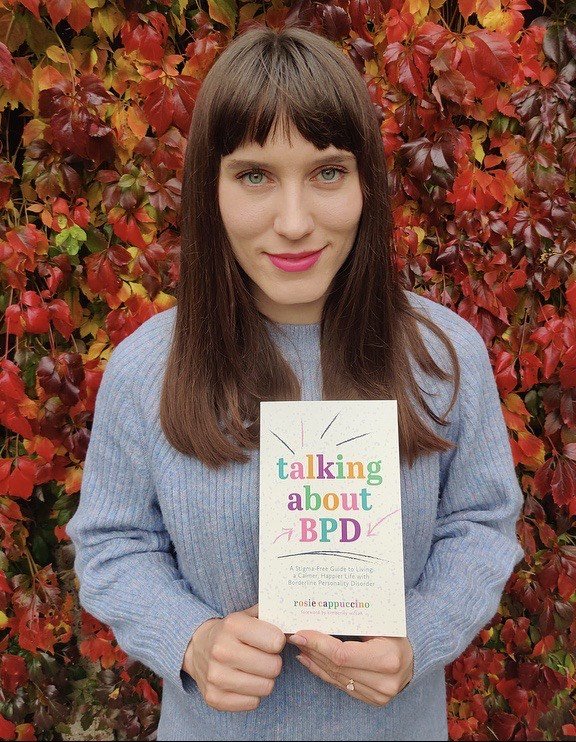
New Book: Talking About Borderline Personality Disorder (2021)

November 9, 2021 Amanda Smith

I love hearing from new authors and I’m very excited about Talking About BPD: A Stigma-Free Guide to Living a Calmer, Happier Life with Borderline Personality Disorder (Jessica Kingsley Publishers, 2021) by Rosie Cappuccino.

I hope that you enjoy this interview with Rosie. —Amanda


Tell us about your background. Why write Talking About BPD?
I’ve been blogging about borderline personality disorder (BPD) since the beginning of 2014. I started blogging because I needed an outlet to express the fear, confusion and loneliness I felt regarding my new diagnosis. I didn’t neither knew anyone with BPD nor understood how to manage it, so I was looking to connect with others who could help me learn more about myself. I also recognised immediately the horrendous levels of stigma associated with BPD and I wanted to share my experience of this condition—an experience that bore very little resemblance to depictions I saw online and read about in books.

After a few years, my blog started to grow and I started doing more podcasts and writing. In 2019, I won a Mind Media Award for my work towards increasing understanding towards people with BPD and it was around that time that my book started to take shape. I wanted to produce a book that could bring comfort and validation to people with, or who related to, a diagnosis of BPD. I know how isolating and agonising life with such a stigmatised condition can be and I wanted to do something that might alleviate the pain somewhat. 


What is the most important message in your book for individuals who have just been diagnosed?
There are a handful of key ‘takeaways’ I think- and people who have contacted me since the book’s release have affirmed these. Firstly, that people with BPD are not what the stereotypes present them as; they are not manipulative, attention-seeking or dramatic.

People with BPD commonly experience intense distress and it’s only natural that a person’s behaviour will reflect how distressed they feel inside. Secondly, the book offers a message of hope that things can feel better over time; its readers are lovable, valuable, worthy of respect and deserving of care, even when they may have been told (directly or indirectly) that they are not.   


What do you wish more mental health professionals knew about BPD?
I wish that all mental health professionals tried to imagine themselves into the shoes of a person in such intense distress. When a professional uses their imagination (or perhaps even lived experience) to empathise to the deepest possible level, then I believe they are less quick to judge emotional distress and the person in front of them. In my opinion, the most effective mental health professionals are those who show unfailing respect for an individual, even when that person is living, thinking, feeling, communicating and behaving differently to them.

I want high-quality, stigma-free training on borderline personality disorder to be widely available to all mental health professionals so that they are fully-equipped to understand and skillfully support people with this condition who come into their settings. I also want professionals to think critically when they encounter myths and stereotypes, rather than blindly accepting them and then have the courage to stand up and challenge them, even when that involves questioning what a colleague or a manager is saying. 


How do you think family members and friends can help someone who has just been diagnosed with BPD?
First of all, loved ones of people with BPD need to learn about the condition from reputable and non-stigmatising sources. They need to be careful not to absorb stigma and then pass on its damaging effects. Secondly, I would recommend ongoing dialogue with the person affected by asking open questions like ‘what would help you?’, ‘how can I communicate most helpfully with you?’, ‘what makes you feel comfortable?’. Also people with BPD often experience boundaries as cold and rejecting.

I would also advise family and friends to assert boundaries with as much gentleness as possible. It can be really helpful to show care and consistency, even with little things like texts to say hello. 


What has helped you the most in your recovery journey?
Without a doubt, the most helpful thing for me has been dialectical behaviour therapy (DBT). Almost immediately after starting DBT, there was an improvement in my emotional regulation, as well as my ability to cope with suicidal thoughts and urges to self-harm. After years of not knowing how to manage intense emotions and overwhelming urges, I finally learnt the skills to respond effectively to my emotional dysregulation. In the context of DBT, I finally felt seen and understood, rather than judged. My everyday terror was acknowledged and, after a decade of fear, I began to feel safe in my own mind and body. The relief was like stepping out of a blizzard into a warm home. 


What are you currently reading or listening to?
I’ve just finished reading The Miniaturist by Jessie Burton, a novel set in Amsterdam in the 1600s. The level of detail was gorgeous, the writing was so rich that all my senses were activated whilst reading it. I love to read which is probably why I studied English Literature at university. 


What's next for you?
I’m resting at the moment. Honestly, writing a book is full on and it takes a lot of emotional and cognitive energy. There is so much work that goes into the book other than all the writing and editing, such as sorting out the contract, corresponding with the publisher and the launch. I will be continuing with my blog and social media as I continue to derive so much satisfaction from expressing myself and interacting with individuals there. I would like to do more podcasts, radio or maybe even something for TV if an opportunity ever comes my way.


Congratulations, Rosie! You can purchase Rosie’s book here on Amazon.com and here on Amazon.ca.

You can follow Rosie’s Instagram account here.

← Newer Posts Older Posts →

I Can Help You—or Someone You Love—Feel Better.

Sign up now to receive occasional updates and receive a free DBT-inspired coloring page from me.

All inquiries are confidential.

Privacy Policy and GDPR Compliance Statement

Yay! You're awesome.

Please check your email now and confirm that you are subscribed. :)

Amanda L. Smith, LCSW
900 Austin Avenue Suite 304
Waco, Texas 76701
amanda@hopeforbpd.com

Compassionate and confidential treatment options for emotion dysregulation, self-harming behaviors, suicidal thinking, and borderline personality disorder.


Please note: I participate in Amazon.com, LLC's affiliate program. That means that I may receive a small commission from items purchased through many of the links contained throughout this web site. There is never an additional cost to you when you make a purchase through these links.